
Searching Kanabec County Civil Dockets
Minnesota Court Records Online (MCRO) handles remote access for an eligible Kanabec County civil case. It is the remote front door. Open Case Search, choose the Civil category, and select Kanabec County under Court Locations. A complete case number narrows things fastest. When you lack it, party, business, attorney, and filed-date searches still work.
Before trusting a hit as the right Kanabec County civil case, check Case Details. The case title, court location, filing date, parties, and status should all line up. The Kanabec County Register of Actions serves as the event index for the court file. It points to a document or hearing. For a specific result that matters, though, read the actual Kanabec County public order. Also read the judgment or filed paper. Compare them before relying on the index alone.
- Open MCRO Case Search, select Civil, and set Court Locations to Kanabec County.
- Enter a complete Kanabec County case number, party name, business name, attorney, or a supported filed-date range.
- Open the matching Kanabec County Case Details record and compare its parties, filing date, and court location.
- Review the Kanabec County Register of Actions for claims, responses, motions, hearings, and orders.
- Use the Kanabec County document, judgment, counter, or copy-request route that fits the specific record needed.
Kanabec Civil Name and Business Searches
Person searches in MCRO take Last, First, and Middle fields. Businesses get their own business-name workflow. That matters when a Kanabec County civil claim involves an organization. Punctuation, abbreviations, and legal suffixes can all throw off a match. Try the name exactly as the Kanabec County court paper shows it. Then try a careful variant.
Spelling trouble? A trailing wildcard after two characters or the Sounds Like option helps with variations. MCRO refuses both at once, though. Results cap at 200, ordered Newest First or Oldest First. A broad Kanabec County search gets sharper with filters. Use the court location, Civil category, filing-date range, and status filters the live interface actually offers. Guessing at hidden status choices only wastes time. Each result row is a lead to Kanabec County Case Details. It is not a substitute for reading the parties and court information there.
If a notice or order already gave you the full case number, use it. That beats broadening a name hunt. It also cuts false matches. And it makes a particular Kanabec County document easier to reach through the separate Document Search route.
Inside a Kanabec County Civil Docket
Open a Kanabec County civil file in Case Details and you may find parties and attorneys, filing and claim events, motions, orders, hearings, judgment information, financial information, documents, and a recorded satisfaction. Each Kanabec County court event can link an action in the Register of Actions to a document index number. The case information may also name the court location, judicial officer, filing date, and status.
| Case Number | The Kanabec County court-assigned identifier. Use the complete number, with dashes or leading zeroes if shown and without spaces. |
|---|---|
| Parties and Attorneys | The people or organizations in the Kanabec County case and the counsel currently shown in the court record. |
| Filings and Motions | Kanabec County chronological entries for a complaint, petition, response, affidavit, request, or ruling. |
| Hearings and Orders | Scheduled Kanabec County court events and judicial directions whose effect depends on the actual entry or order. |
| Judgment and Satisfaction | A recorded Kanabec County adjudicative or money entry and any later notation of payment or fulfillment. |
A Kanabec County case status is not a judgment. Keep that straight. A public Kanabec County docket can list an event even when its attachment stays restricted, which is why the document index and the access route both matter.
Kanabec Civil Conciliation Dockets
Conciliation Court is Minnesota's small-claims arm of District Court, not a separate Kanabec County court. Its simplified process handles qualifying Kanabec County monetary claims. Meanwhile, the Kanabec County District Court file and the county court's case-search tools stay on the record path. Do not confuse a conciliation matter with a city administrative record or ordinance page.
The Minnesota Judicial Branch Conciliation Court overview lays out the statewide small-claims service. That service sits behind the Kanabec County civil-docket context.
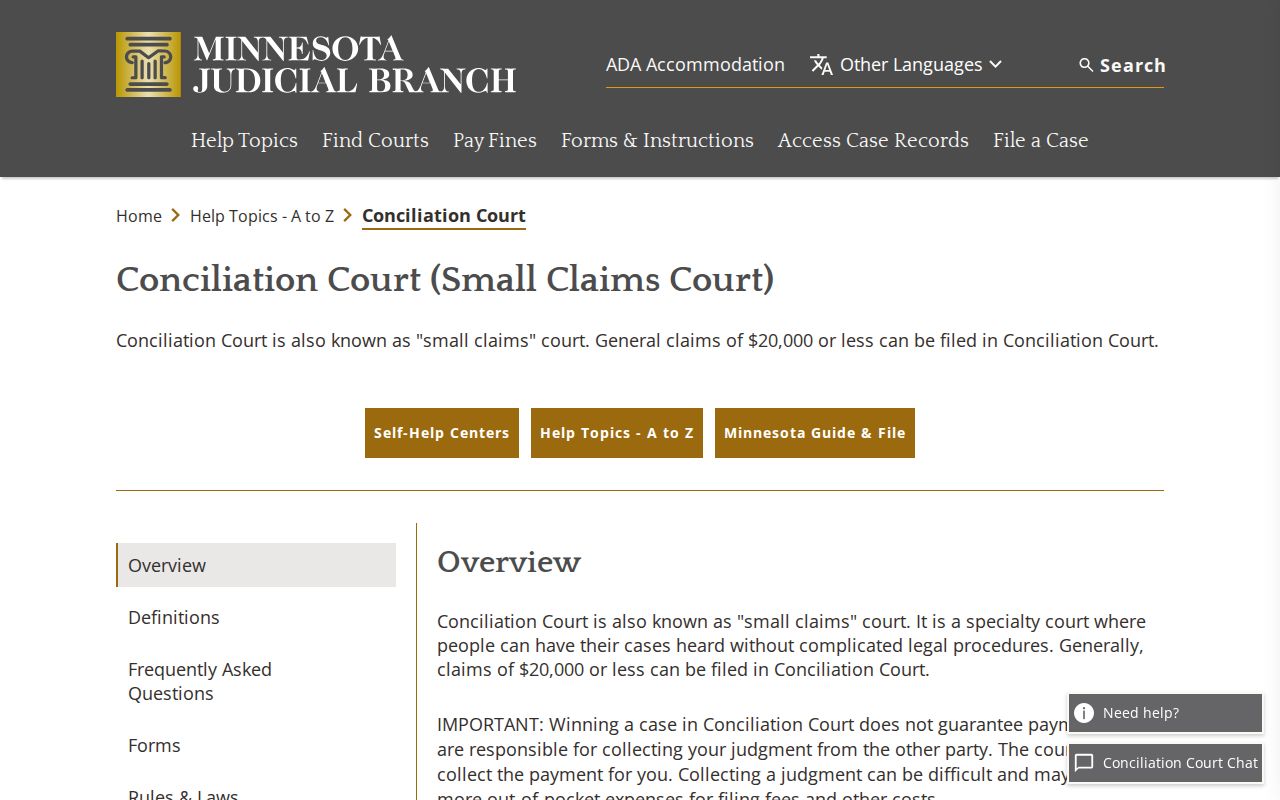
For a known Kanabec County small-claims case, pull up the Kanabec County District Court case number and its Case Details. An appeal, if one is filed, is heard anew in District Court.
Civil Case Types on the Docket
Civil covers more than one kind of lawsuit. Minnesota's court categories split major civil, minor civil, family, and probate or mental-health matters apart. The Kanabec County District Court acts as the local court of record for each of those Kanabec County areas, yet their remote document access and procedural rules differ from one class to the next.
- Major and minor civil: claims involving contracts, property, torts, or other general civil issues.
- Conciliation Court: the small-claims division of Minnesota District Court.
- Family: civil matters with distinct privacy and remote-document limits.
- Probate, guardianship, conservatorship, and trust: records that can involve protected financial or personal information.
- Other protected matters: categories whose public display depends on the access rules and any court order.
A case category marks a procedural class. It says nothing about who is right in the Kanabec County dispute. A settlement may surface as a filing, a dismissal, or an order, and a default records a procedural event, not the whole claim. For reliable detail, go to the particular Kanabec County file and its public orders.
Kanabec Civil Family Scheduling
Kanabec County family matters can run on unusual processes. They may look nothing like a general civil motion schedule. Early Neutral Evaluation is a Minnesota court-connected process for certain family cases. The Tenth District publishes program material that includes Kanabec County. A scheduling entry, referral, or notice can sit in a court file. Not every family paper is available from home.
The Early Neutral Evaluation overview explains the court-connected process. That process can frame a Kanabec family-case event.
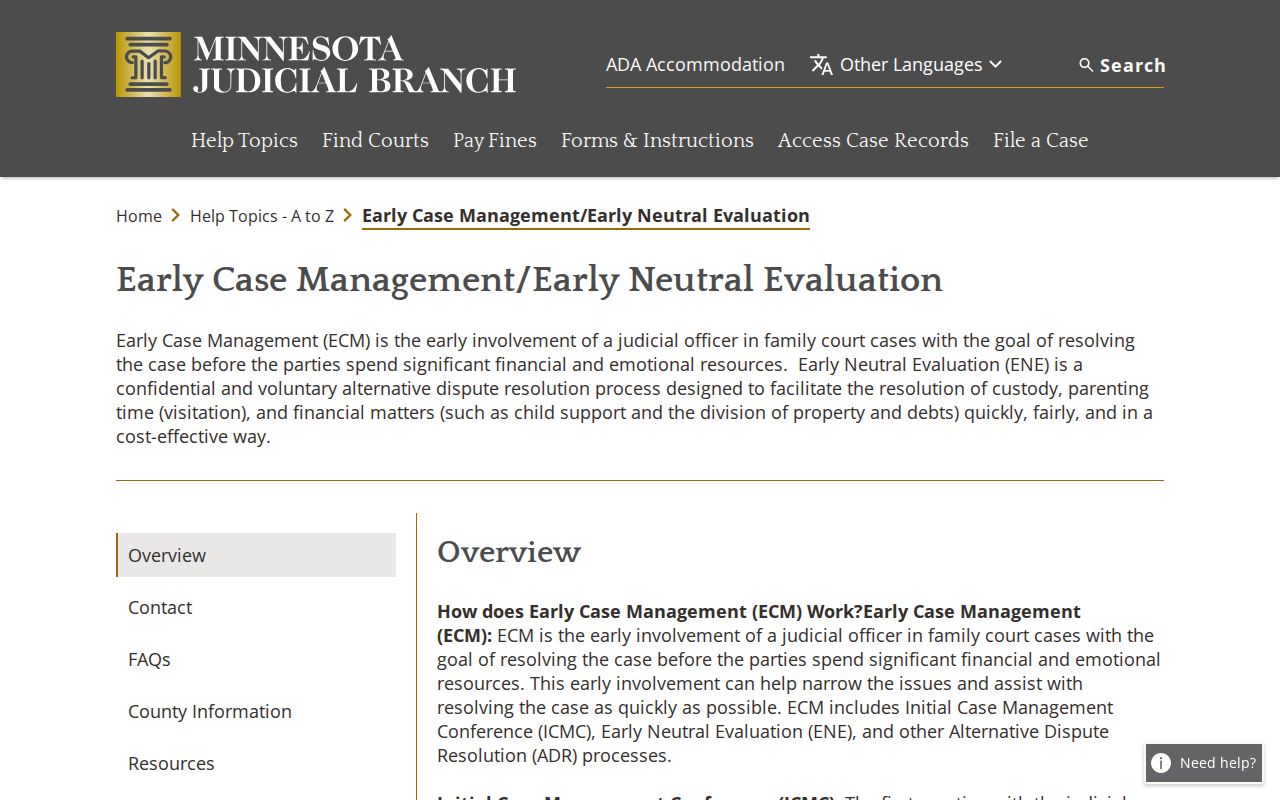
Pin down the exact Kanabec County hearing, conference, or program event through MCRO Case Details and the court notice. Public access to a Kanabec County family case does not put every attachment within reach from home.
Civil Docket Settings and Hearings
A Kanabec County civil docket setting can take many forms. One entry might be a motion, a conference, a settlement event, or a full hearing. Each is paired with a date, a time, a judicial officer, and a courtroom. Treat the listed time as a plan, not a report. Courtrooms and judicial officers get reassigned in Kanabec County without much notice. The label alone says nothing about how the matter was resolved.
For a setting you can rely on, run the MCRO Hearing Search. Or check the official Kanabec daily calendar. Then open Case Details for the full event history. The daily PDF posts at 7:00 a.m. on business days and gets refreshed hourly. Confidential and non-remote matters may still be left off it. On hearing day, the courthouse lobby and courtroom displays are the most current source of all. See Court Dates for the fuller calendar route.
Kanabec Civil Judgment Checks
Reading a Kanabec County judgment takes two entries working together. The judgment itself is the formal entry imposing an adjudication or a money obligation. A satisfaction is the later notation showing the judgment was fulfilled, in whole or in part. The satisfaction settles the account. But it does not erase the original Kanabec County judgment from the record. A default works the same way: it can follow a failure to respond or appear, yet it says nothing about the merits of the underlying claim.
To trace a docketed Kanabec County money judgment, use MCRO Judgment Search with a debtor name and docketed date. Then follow the link to Judgment Details and any satisfactions. For one particular filed paper, MCRO Document Search needs the complete case number. The Kanabec County District Court fee page prices a certified judgment search at $5 per name and a transcript of judgment at $40. It pays to confirm current fees before ordering. When you request either product, give the court the name and case details that tie the request to the right Kanabec record. Remember that the fees buy the copy products, not a promise that every older record still exists.
Civil Docket Access Rules
Access to a Kanabec County civil docket depends on when the case was filed. It also depends on what kind of paper it is. Civil cases filed on or after July 1, 2015 generally have public documents in MCRO, subject to restrictions and what is actually there. Earlier files offer thinner remote coverage. Family and post-adjudication paternity cases are narrower still. A visible civil docket entry can sit next to an attachment that stays protected.
The access matrix draws its own lines. Court-prepared orders, appellate opinions, and notices are treated differently from the papers a party files in a family matter. So a public case name or docket event never answers whether a given attachment can be viewed remotely. Check the record's available document link and the current matrix before planning a copy request.
The governing framework comes from the Minnesota Rules of Public Access. Rule 2 sets the public-access presumption. Rule 4 handles nonpublic and confidential material along with sealing. Rule 8 controls the remote-access tiers. General Rule 11 protects identifiers. Minnesota Statutes section 13.03 adds public-data background, but court-specific access rules control when the two conflict.
Key Rules:
Minnesota Rules of Public Access, Rules 2, 4, and 8 - Public access is the starting point, with limits for confidential records, sealing, and remote display.
Minnesota General Rule 11 and current rules - Court rules restrict identifiers and require appropriate redaction.
Minnesota Statutes section 13.03 - Public-data inspection is the general background rule, while court-record rules control this docket.
Kanabec Civil Access Options
Start with MCRO for remote work. Then turn to the MNPAC terminal at the Kanabec courthouse for a wider public electronic view of court records. The Court Administration counter handles local paper requests too. Call 320-679-6400 if a phone question is easier. For mail, state the case, the document, a date or index number, a return address, and a daytime phone number. The Kanabec court page lists the Minnesota District Court contact for the county. The Kanabec court contact route takes general court questions. Local records guidance says to allow about five days for a response.
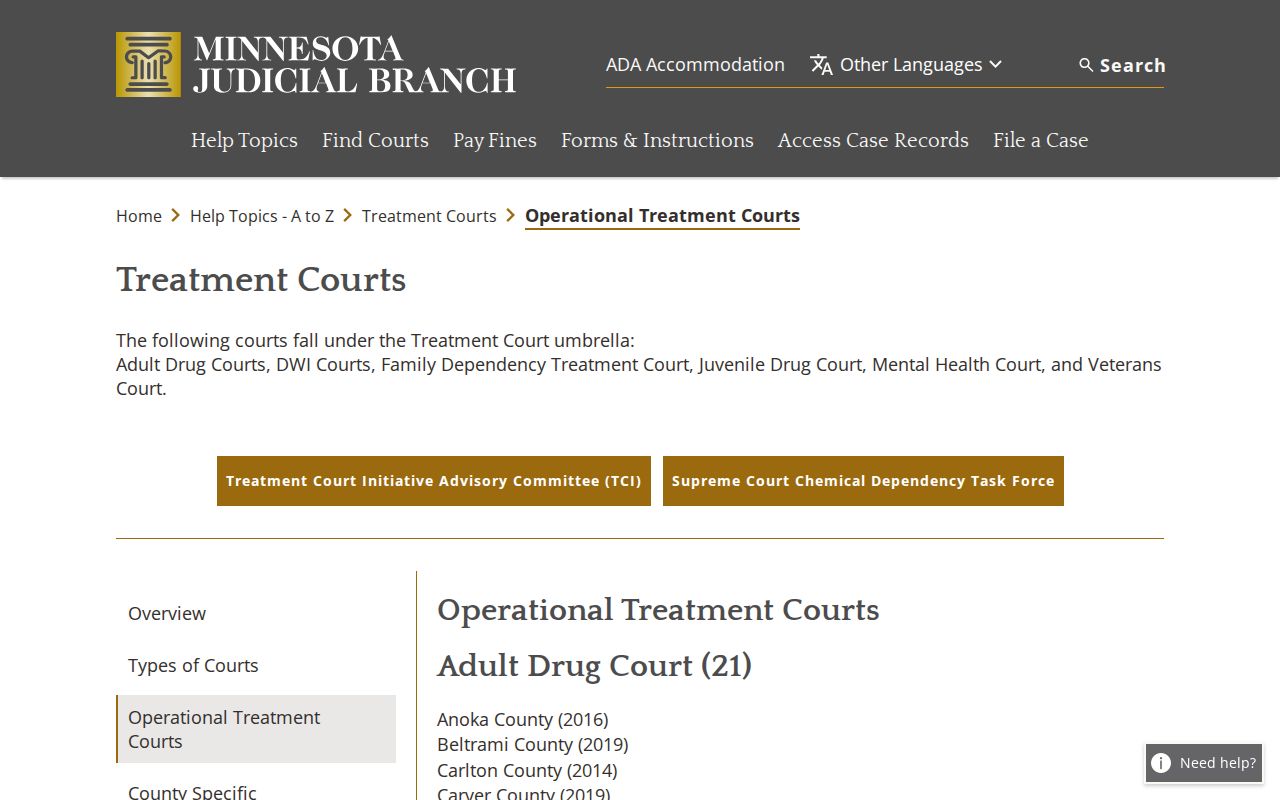
For broader context, the Minnesota operational treatment courts directory lists the state's specialized court programs. Those programs sit apart from a standard Kanabec civil docket search.
Minnesota eFile and eServe serves parties and authorized filers, not public record searching. The Tenth District records page explains the MNPAC, copy, mail, and transcript routes when MCRO falls short. MNPAC can display more public material than home access. Even so, it will not open a sealed or confidential record.